
Ancient wisdom for modern goodmakers: Hildegard of Bingen
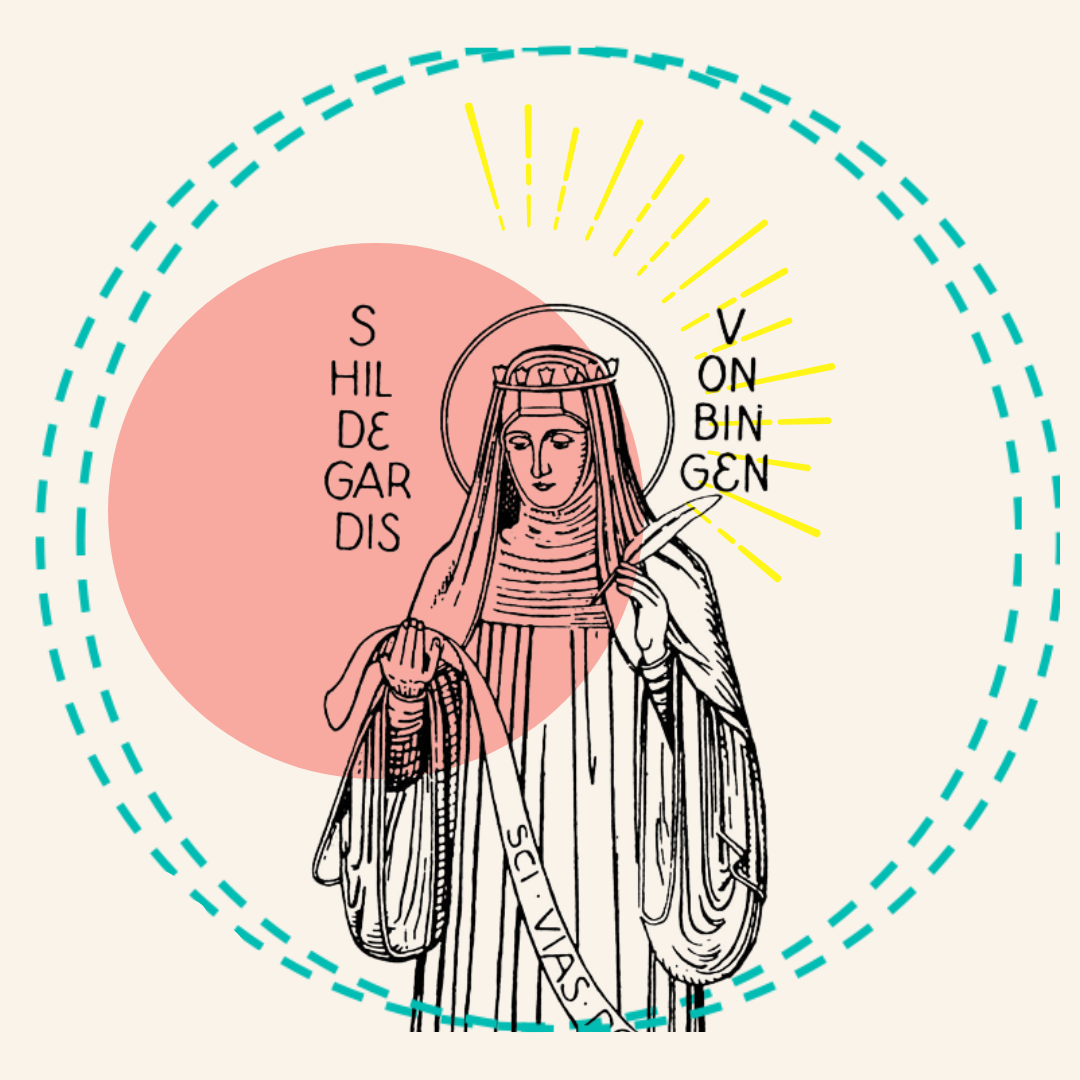
Hildegard of Bingen wrote letters to some of the most powerful people in 12th century Europe. Popes. Emperors. Queens. Archbishops. And she did not write to flatter them.
She wrote to challenge them.
She told a Holy Roman Emperor, bluntly, that he was behaving like a child. To Bernard of Clairvaux (the most influential churchman in Europe) she wrote asking for his blessing on her work, but she did not wait for it before she began.
She was, by any measure, a woman who knew how to speak into power.
And yet this is how she described herself:
"I am a feather on the breath of God."
Small. Carried. Not the source of the movement, but willing to be moved by it.
For our work, this paradox is worth sitting with.
Because most of us know one side of it better than the other.
Some of us find it easier to be the feather: responsive, collaborative, attuned, present to what the Spirit might be doing. We are good at working alongside others. We build trust well. We hold space generously. But we hesitate when it is time to walk into a difficult room and say what needs to be said.
Some of us find it easier to be bold: direct, clear, willing to challenge, unintimidated by institutional weight. But we can lose the lightness. We can start to believe the movement depends on our own force rather than on the breath that carries us.
Hildegard was both. Fully.
She was bold because she was carried.
She could challenge power because she was not trying to impress it.
She could speak difficult truths because she had a clear sense of where she stood and who had sent her.
And she did not do any of it alone.
For decades she worked alongside a monk who helped her transcribe and refine her writing. She led a community of women who built something genuinely new together. When her closest companion was transferred to another abbey, Hildegard wrote letter after letter to have her returned, not out of possessiveness, but because she understood that the work required faithful people beside you, and that those relationships were worth fighting for.
She was a collaborator as much as she was a visionary.
The breath of God, she seemed to understand, often moves through the people beside us.
For those of us building ventures and organisations and partnerships, this has something to consider.
It means we can speak into rooms of power without losing our groundedness, if we know whose breath is carrying us.
It means we can be genuinely collaborative without losing our voice, if we stay clear about what we are called to say.
It means we can invest deeply in the people we work alongside, because faithful partnership is not a distraction from the work. It is often the work.
Being a feather on the breath of God might look like:
Entering difficult conversations from a place of rootedness rather than anxiety.
Saying the thing that needs saying in the room where it needs to be said.
Building teams and partnerships where people genuinely belong, not just perform.
Holding your role lightly enough that others can lead too.
Trusting that the movement you are part of is bigger than your own capacity to create it.
Hildegard did not accumulate power. She channelled it.
She wrote to emperors and abbots and popes not because she sought influence, but because she believed the truth she carried was for them (whether they welcomed it or not).
And she built her community not as an institution to be protected, but as a place where life could grow.
Blessing
May we carry what we have been given with that same combination of lightness and courage.
May we find the people the breath of God has placed beside us, and tend those partnerships faithfully.
And may we learn to speak clearly into every room we are given to enter - not from our own strength, but from the breath that carries us.