
Ancient wisdom for modern goodmakers: Julian of Norwich
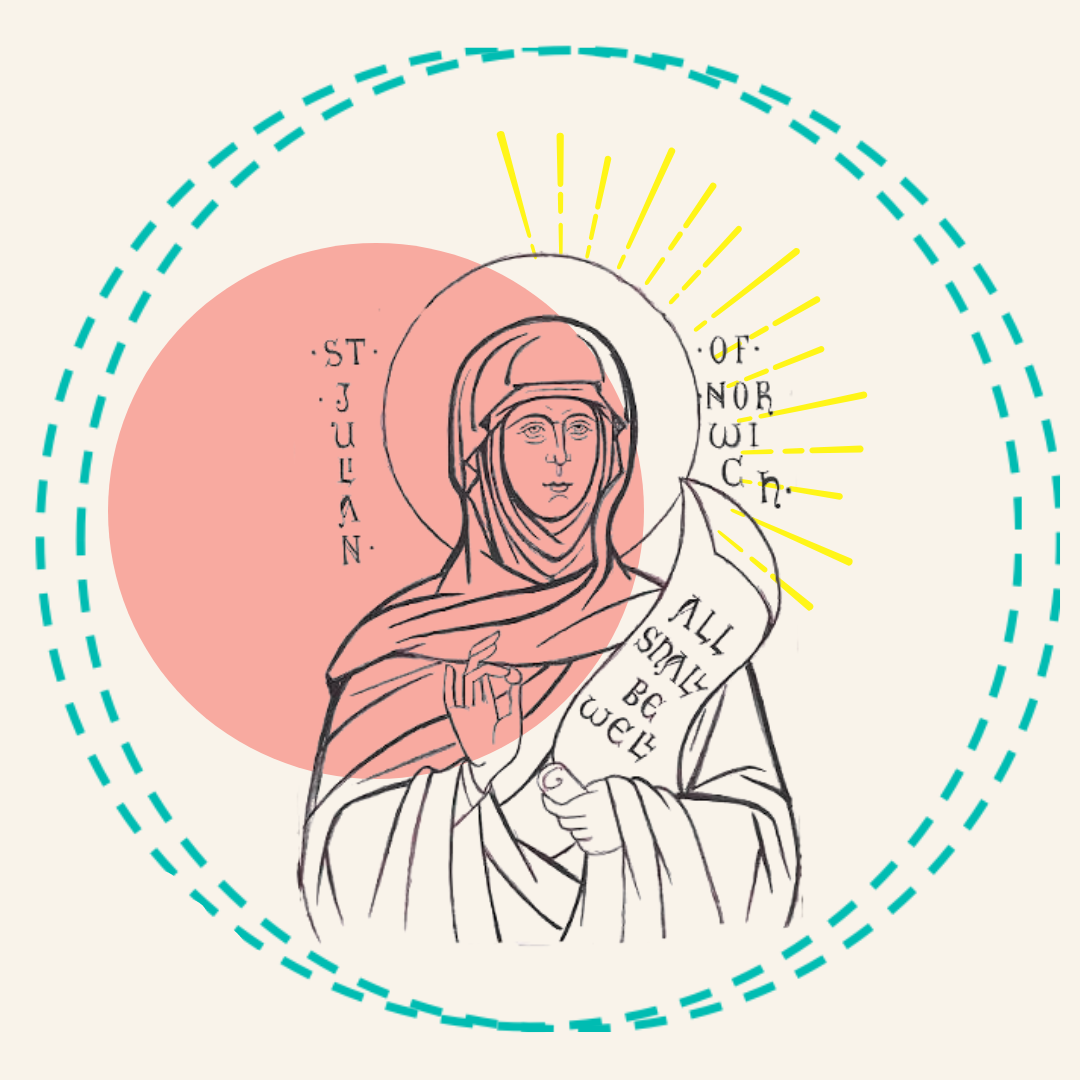
Julian of Norwich was a 14th century mystic who wrote during one of the most devastating periods in English history. The Black Death had swept through Europe. Poverty was widespread. Society felt like it was unravelling. And it was in the middle of all of that — not in spite of it — that Julian received the words she is most remembered for:
"All shall be well, and all shall be well, and all manner of thing shall be well."
For our work, these words can take on particular weight.
But first, we need to understand what Julian actually meant.
She was not saying that everything is fine.
She was not asking us to look away from suffering.
She was not offering reassurance in the face of injustice.
Julian sat with the hardest question: if God is love, why does so much go wrong? And the answer she received was not an explanation. It was a promise. A promise rooted not in circumstances, but in the certainty of a love that does not give up on what it has made.
All shall be well.
Not yet. But held. Always held.
For those of us doing this work, this matters deeply.
We operate in systems that are genuinely broken.
We see need that outpaces resource, every single day.
We carry ventures that feel fragile, and hopes that are costly.
Julian's words do not ask us to pretend otherwise.
They ask us to hold the brokenness and the promise at the same time.
To grieve what is not yet well, and keep building anyway.
To name what is unjust, and refuse to be paralysed by it.
To face the gap between the world as it is and the world as it could be, and let that gap be the very place we work.
This is not toxic positivity.
It is a defiant, grounded, resurrection hope.
Julian wrote her words in a small stone cell attached to a church in Norwich. She had chosen to be enclosed, present to God, present to the world through a small window, receiving visitors who came with their grief and confusion and need. She was not disengaged from suffering. She sat inside it. And she still wrote: all shall be well.
That is the posture available to us too.
Not certainty about outcomes.
Not confidence that our model will scale.
Not proof that the systems will shift in our lifetime.
But a deep, unhurried trust that the love behind this work is stronger than the obstacles in front of it.
Holding that posture might look like:
Continuing to show up when results are slow.
Building for the long good, not the quick win.
Releasing what we cannot control, without abandoning what we are called to.
Letting honesty about what is broken coexist with genuine hope for what is possible.
Measuring faithfulness, not just impact.
Julian also reminds us that we do not need to understand how all shall be well.
She admits she cannot see the how. She calls it the "great deed" that God will do — beyond her sight, beyond her understanding. But she trusts the who behind the promise, and that is enough.
Blessing
We may not live to see the fullness of what we are building.
We may not understand why some things do not turn around.
We may never know the final shape of the good we set in motion.
And still: all shall be well.
May we build with that confidence.
Lead with that patience.
Persevere with that hope.
And may our work become a place where people catch a glimpse of the love that holds all things: the love that does not let go, that redeems what seems unredeemable, and that is already, quietly, making all manner of thing well.