
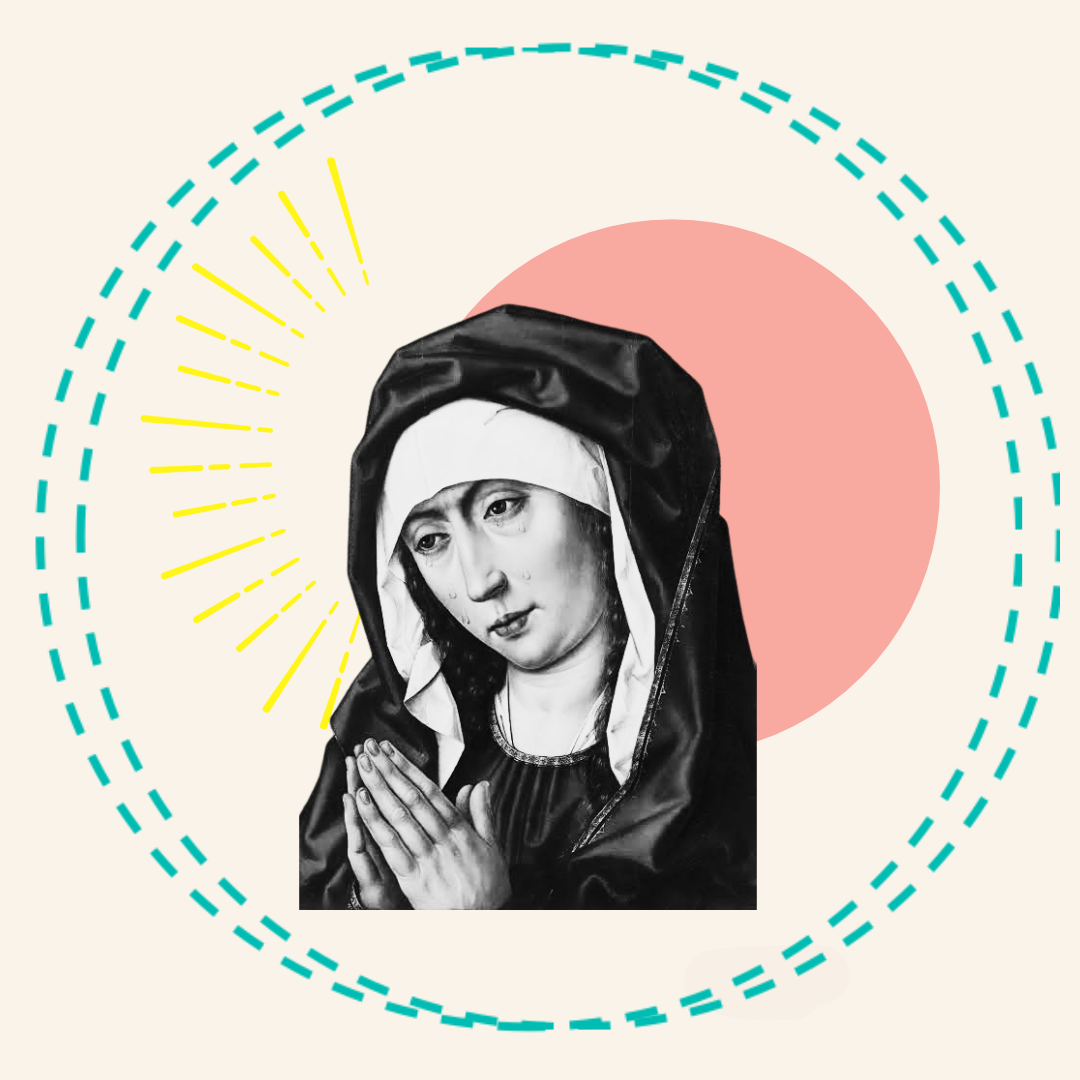
Margery Kempe found a way.
That may be the best summary of her life.
She was born around 1373 in the busy port of Lynn, in Norfolk, the daughter of a merchant. At about twenty she married, and over the years she had fourteen children. After the birth of the first, she became so ill and so tormented that she feared for her life. Some say we might call it post-partum psychosis today. In the midst of this she believed that Christ appeared at her bedside and asked why she had forsaken him when he had never forsaken her.
She rose from that bed changed, though it took her years to understand what this change would mean for her.
Unhappy in a complicated and likely abusive marriage she longed for independence. She tried brewing, and it failed. She tried milling, and that failed too. Then, in her forties, she began the long road of her calling. She became a professional pilgrim. She travelled to Jerusalem, Rome and Santiago, and later to northern Europe. She was mocked in the street and shut out by people who should have welcomed her. Church authorities examined her more than once on suspicion of heresy, in an age when that could cost a woman everything.
And she was illiterate. She did not write down her own story.
Any one of these might have been a reason to stop.
A failed business.
A complicated marriage.
A reputation under suspicion.
A world that said not you, not her, not like this.
Margery did not treat any of them as the final word. She looked at each closed door and asked a different question.
Not why is this happening to me?
But where is the way through?
She answered her accusers calmly, again and again, until they let her go. She could not write, so she found scribes to take her dictation. The first attempt failed, so she tried again, until her words were on the page. It became the first autobiography in the English language.
But how did she do it?
Margery would not have said it was strength of character, and she certainly would not have said it was strategy. She would have said she was never alone.
At the heart of her spirituality was a simple, startling conviction: that Christ was near, and that she could talk to him. She called it “dalliance”, a kind of continual, affectionate conversation. She brought him her fears and her plans and her frustrations, and she believed he answered.
Margery was also known for her tears. Her loud, public weeping unsettled many people, and still does. But perhaps it was part of how she stayed soft in a world that tried to harden her. She let grief and love pass through her rather than turn to bitterness. Whatever else we make of her tears, they kept her open, and an open heart can hear where the way is. Those looking on might say, she was a mess.
She called herself this creature, a created thing, loved and dependent, she gave asking for help, not a second thought. She went to Julian of Norwich in a moment of doubt, and Julian gave her something she carried for life: that the Spirit never leads anyone against love. Margery had her test. Does this lead toward love? Then keep going.
So she always found a way, not because she was self-sufficient, but because she was accompanied.
For those of us who start things, do ‘mad things’, things other people wouldn’t do - this is worth sitting with.
We know the closed doors.
We know the voice that says someone else would be better suited.
We know what it is to stand in a room where we do not quite belong, carrying something we cannot quite explain.
Margery reminds us that the way is rarely a clear path. More often it is a conversation, held day by day with the God who walks beside us, and a few trusted people who help us hear what we are being told.
Every one of us needs accompaniment - accompanied by God and by a Julian, a mentor or spiritual director. And one day, someone may need us to be their accompaniment.
Blessing
So as we go back to our work, may we carry something of this ‘creature’ with us.
May we be gentle with the ventures that failed, and curious about what they have taught us.
May we meet the closed door with a different question, not why me? but where is the way?
May we remember that we are not walking alone, and may we bring our plans and our fears to the one who is already beside us.
May we keep our hearts open, tender enough to feel what is real and strong enough not to be hardened by it.
May we find our Julian, the one who listens without hurrying us and helps us trust what is true. And may we be that for someone else.
May we be stubborn in the places that matter, and unembarrassed by the depth of our love for God and for the people we serve.
And when the doors close, as they will, may we remember that she found a way, because she was never alone.
So can we.
Go bravely. Love loudly. And know that you are held, messy tears and all.